
Invasive Pike in Southcentral Alaska
Problem Areas
Problem Areas
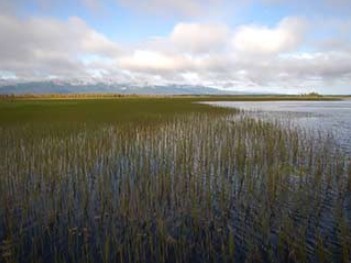
Generally, when pike are introduced to a shallow vegetated lake or a slow-moving weedy river in Southcentral Alaska, they eventually consume all the juvenile salmon and trout. When the salmon and trout are gone, they start eating stickleback and other fish. If those are eliminated from heavy predation pressure, their diets will shift almost exclusively to invertebrates and the occasional duckling or rodent.
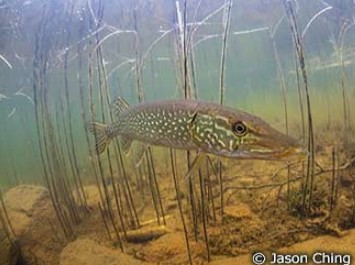
A common misunderstanding is that pike will cannibalize each other and that the large pike will eliminate the smaller ones but this is wrong. Cannibalism rates are very low and in time, the large pike are harvested by anglers or die, and the remaining pike population often consists of "hammer-handles" - small pike that won't grow because there is no longer sufficient food to support substantial growth. Once the population is under "stress," their biological response is to mature at this smaller size and increase their reproduction. The end result is a lake full of stunted, little pike. This pattern has been repeated in many Southcentral lakes.
Pike prefer shallow, slow-moving waters with abundant aquatic vegetation.
If you catch a pike where you have never seen one before, keep the fish and report it to 1-877-INVASIV.